Physical Address
304 North Cardinal St.
Dorchester Center, MA 02124
Physical Address
304 North Cardinal St.
Dorchester Center, MA 02124
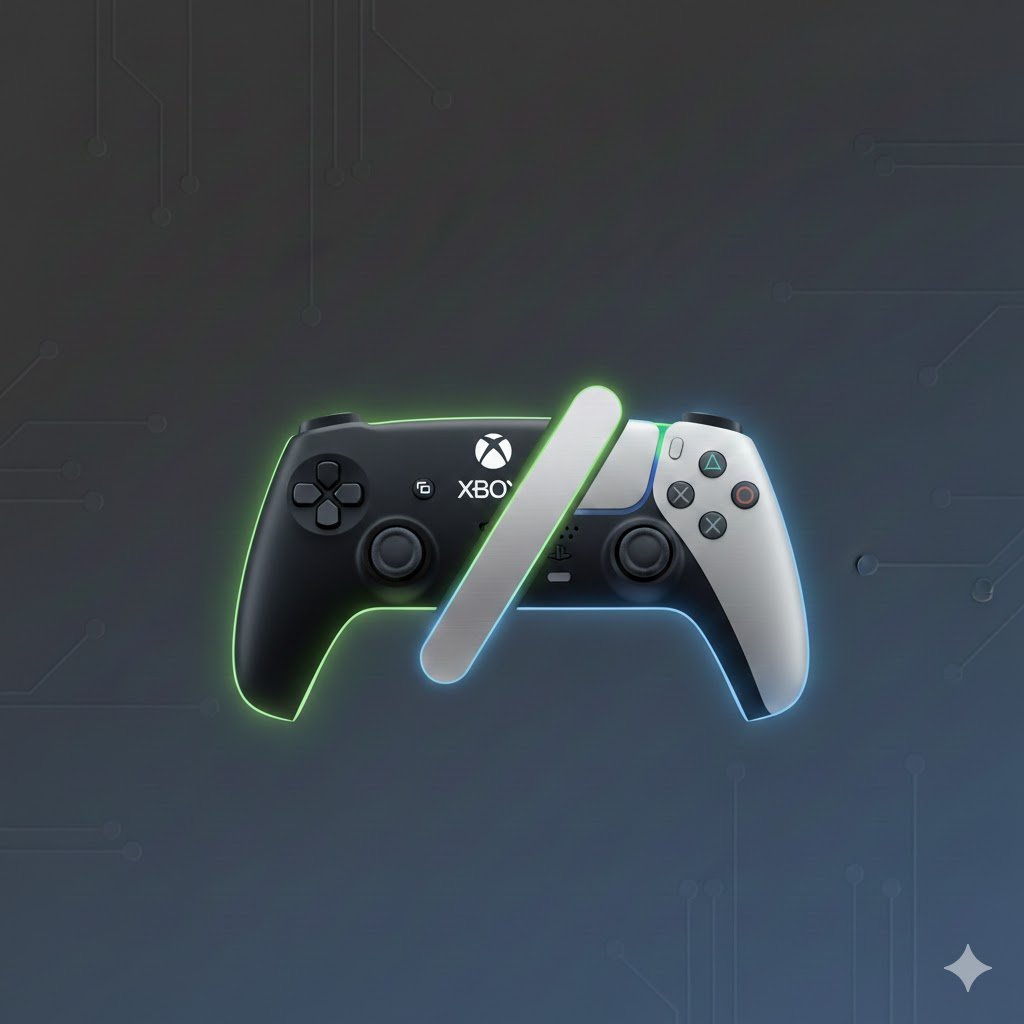
Take a breath for a second, because this is one of those industry moments that doesn’t just feel like news — it feels like a turning point.
Phil Spencer retiring. Sarah Bond stepping away. An AI-focused executive stepping in as the new CEO of Microsoft Gaming — not the “Xbox Division,” but Microsoft Gaming. That wording alone signals something bigger than a leadership reshuffle. It signals an identity reset.
And at the same time, over at PlayStation, Bluepoint Games — one of the most respected remake studios in the industry — quietly shuts down. Two completely different companies. Two very different stories. Yet somehow, the same underlying theme: gaming is entering a new phase — one defined less by personalities and legacy, and more by systems, scale, and long-term platform strategy.
Let’s unpack what’s really happening here.
For over a decade, Phil Spencer wasn’t just a CEO. He was the face of Xbox.
After the disastrous launch of the Xbox One, Spencer helped rebuild the brand’s credibility. He championed player-first messaging. He pushed Xbox Game Pass when many doubted it. He led major studio acquisitions. He positioned Xbox as a service ecosystem rather than just a console manufacturer.
You didn’t have to agree with every decision he made, but there was always one consistent feeling: this was someone who genuinely loved games. That emotional leadership mattered. It humanized the brand. Now, with Spencer stepping away — and Sarah Bond departing alongside him — Microsoft has appointed Asha Sharma as CEO of Microsoft Gaming. And the tone of her opening message says a lot.
She speaks about urgency. About scale. About expanding across PC, mobile, and cloud. About new business models. About AI — but not “soulless AI slots.” That line is telling. You don’t reassure people about avoiding AI-driven content pipelines unless you know that fear already exists.
This transition wasn’t random. It was planned during a period when Xbox’s strategy was already evolving:
The rebuild phase is over. And when rebuild phases end, corporations do what corporations always do: they bring in platform architects.
The biggest signal in all of this isn’t who left — it’s what Microsoft is calling the division: Microsoft Gaming. That framing matters. It suggests Xbox is no longer primarily a console brand. It’s infrastructure. It’s a service layer. It’s an ecosystem that spans hardware, PC, mobile, and cloud.
Look at the competitive landscape:
The Spencer era was about redemption and emotional repair. The Sharma era looks like it’s about systems, efficiency, and long-term dominance through platform architecture. That doesn’t mean Xbox is dying. If anything, it means Microsoft is doubling down on gaming — but in a different way.
The question isn’t whether Xbox survives.
The question is whether it still feels the same.
Whenever an executive with an AI background steps into gaming leadership, anxiety spikes.
People immediately imagine:
Microsoft’s statement directly addressed that fear, promising not to flood the ecosystem with soulless AI projects. That reassurance matters. But it also reveals the deeper tension in the industry. AI tools are becoming part of development pipelines. Monetization models are evolving. Cloud infrastructure is expanding. The “future of play” isn’t hypothetical anymore — it’s happening.
The real test for Microsoft Gaming will be balance. Can they use AI and infrastructure to empower developers without stripping away the human craftsmanship that makes games meaningful?
Because once that emotional connection is lost, it’s incredibly hard to rebuild.
As if the Xbox leadership shift wasn’t heavy enough, news broke that Bluepoint Games was shut down following a business review. That one stings. Bluepoint wasn’t a struggling studio. They weren’t plagued by delays or scandals. They were consistent. Meticulous. Elite at what they did.
They rebuilt classics like:
These weren’t quick remasters. They were museum-level restorations. Respectful reinterpretations that honored gaming history. In an industry obsessed with engagement metrics and live-service retention curves, Bluepoint represented something rare: craftsmanship without compromise.
So why close them?
Because the industry’s structure is shifting. Sony reportedly pushed multiple teams toward live-service experiments in recent years. Bluepoint was working on a God of War online project that never materialized. Once that anchor disappeared, the studio no longer fit neatly into the roadmap.
And that’s the uncomfortable truth: mid-sized prestige teams are increasingly vulnerable. If you’re not shipping massive blockbusters or feeding a long-term ecosystem, you become harder to justify financially — no matter how respected you are. This isn’t about failure. It’s about direction.
When you zoom out, the Xbox leadership overhaul and Bluepoint’s closure feel connected — even though they aren’t directly related. Both reflect a broader generational shift. The last decade was defined by personality-driven leadership and emotionally resonant recovery arcs. Xbox rebuilt trust. PlayStation dominated with prestige single-player titles. Studios were celebrated for identity and craft.
Now, the industry feels colder. More systemic. More strategic.N
Corporations are thinking in terms of:
The emotional era isn’t gone, but it’s no longer the center of gravity.
Adding another layer to this moment is the evolving situation at Santa Monica Studio. There’s talk of remakes of the original Greek-era trilogy, but not simple visual upgrades. Reports suggest combat systems are being redesigned — pushing these projects closer to reinterpretations than nostalgia ports. That makes sense.
The mechanics of the early God of War titles feel ancient compared to the Norse-era reboot that began with God of War and continued with God of War Ragnarök. If Sony wants new players to revisit Kratos’ origins, gameplay needs modernization. But here’s the bigger twist: insiders suggest the next mainline God of War might be far away. That aligns with how Santa Monica operates. The 2018 reboot took years to rebuild from scratch. Ragnarök came faster because the foundation already existed. A new mythology — Egypt, or something entirely unexpected — would require another long reinvention cycle.
Meanwhile, Cory Barlog is reportedly leading a project that isn’t technically a new IP, but “feels like one.” That wording is fascinating. It suggests Santa Monica might be experimenting — stepping away from predictable franchise iteration and into something spiritually connected but creatively bold. And honestly, that’s probably the healthiest move possible. Ragnarök ended on an emotional high note. Rushing straight into another Kratos saga risks turning evolution into obligation.
Bluepoint’s closure raises a bigger question: what kind of studios does the future actually make room for? If a team known for meticulous, respectful craftsmanship isn’t safe, what does that mean for others?
The industry seems to be consolidating around two extremes:
Mid-sized prestige teams — the craftsmen — are caught in the middle. That doesn’t mean single-player games are dead. Sony still champions them. Microsoft still invests in narrative studios. But the margin for error is shrinking. Evolution without sentiment is colder than failure. And that’s what makes this moment feel heavy.
Yes — but not in the way people fear. It’s the end of Xbox as a personality-led redemption arc. It’s the end of the Spencer era’s emotional rebuild. What replaces it could be bigger. More scalable. More technologically ambitious. But it will feel different. Less personal. More systemic. The real challenge for Microsoft Gaming isn’t technical execution. It’s emotional continuity.
Can a technology-led vision still make players feel seen?
Can infrastructure feel human?
Can AI tools empower creativity rather than sterilize it?
If they can strike that balance, Xbox could become the backbone of gaming across devices for decades to come. If they can’t, they risk losing the very soul that made the rebuild possible.
The gaming industry isn’t collapsing. It’s evolving. Leadership changes. Studio closures. Strategic pivots. These are signs of a medium maturing into a global entertainment powerhouse with stakes far beyond console wars. But maturity comes with trade-offs. Personality gives way to systems. Craft competes with scale. Emotion meets infrastructure. This moment feels heavy because it marks the end of something familiar. The Spencer era is over. Bluepoint is gone. Santa Monica is in transition. But endings in gaming often precede reinvention.
The next 25 years won’t belong to the loudest platform or the safest remake. They’ll belong to the teams willing to question everything, protect what works, and bravely change what doesn’t. The real question isn’t whether Xbox or PlayStation survives. It’s what kind of gaming industry we’re building next — and whether it still leaves room for surprise, risk, and heart.