Physical Address
304 North Cardinal St.
Dorchester Center, MA 02124
Physical Address
304 North Cardinal St.
Dorchester Center, MA 02124
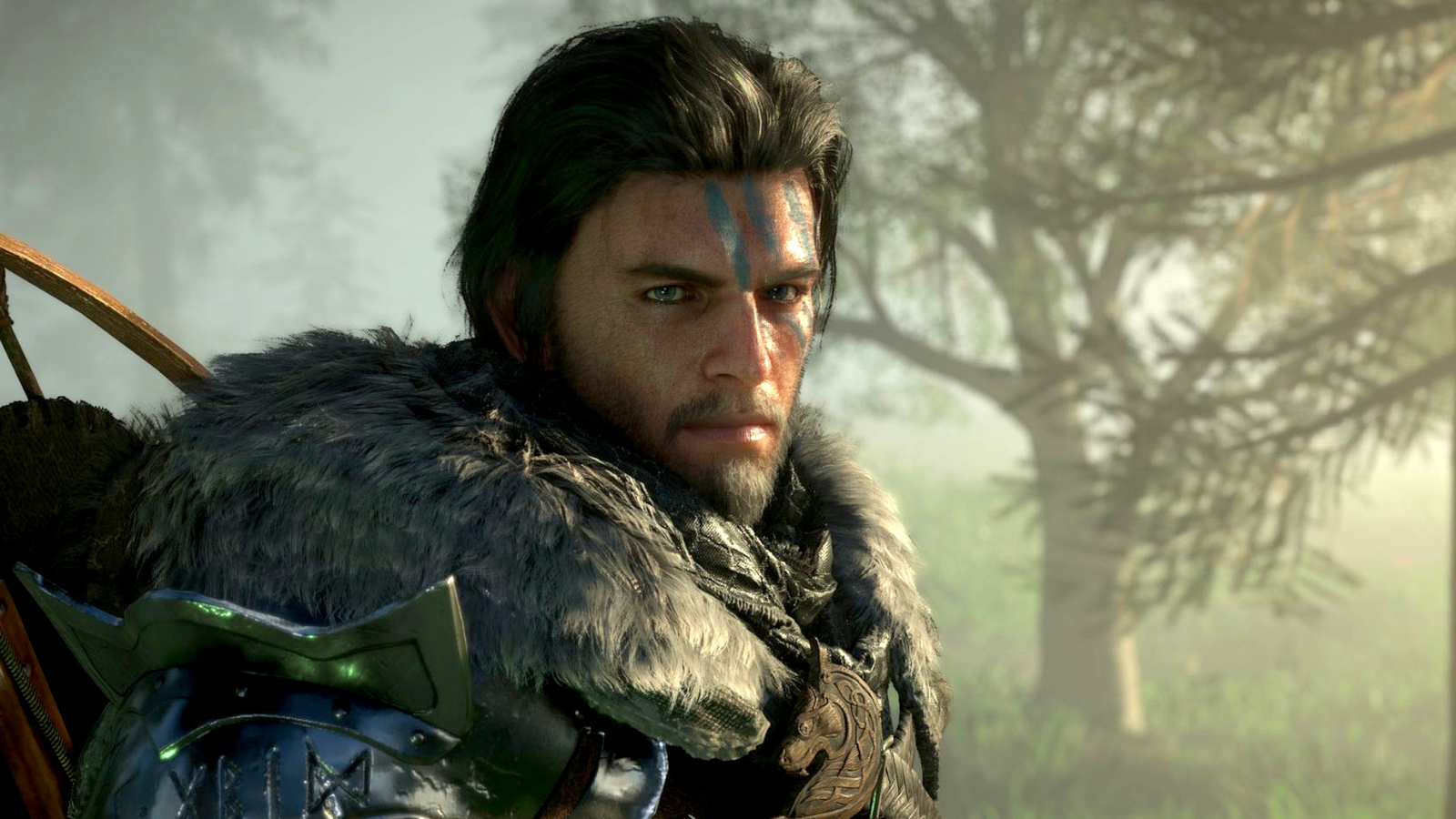
The hype around Crimson Desert has been building for years. With its stunning visuals, ambitious open world, and promises of deep gameplay systems, many players are wondering whether the game can truly deliver on its massive expectations. After spending some hands-on time with an early preview build, it’s clear that Crimson Desert is aiming to be something special.
During my playthrough, I focused heavily on speed and exploration. Rather than slowly dissecting every feature, I wanted to push the demo as far as possible and see just how much the game had to offer. That approach let me experience a wide range of mechanics—from intense boss fights and magical abilities to parkour infiltration and dragon riding.
And honestly? There’s a lot to talk about.
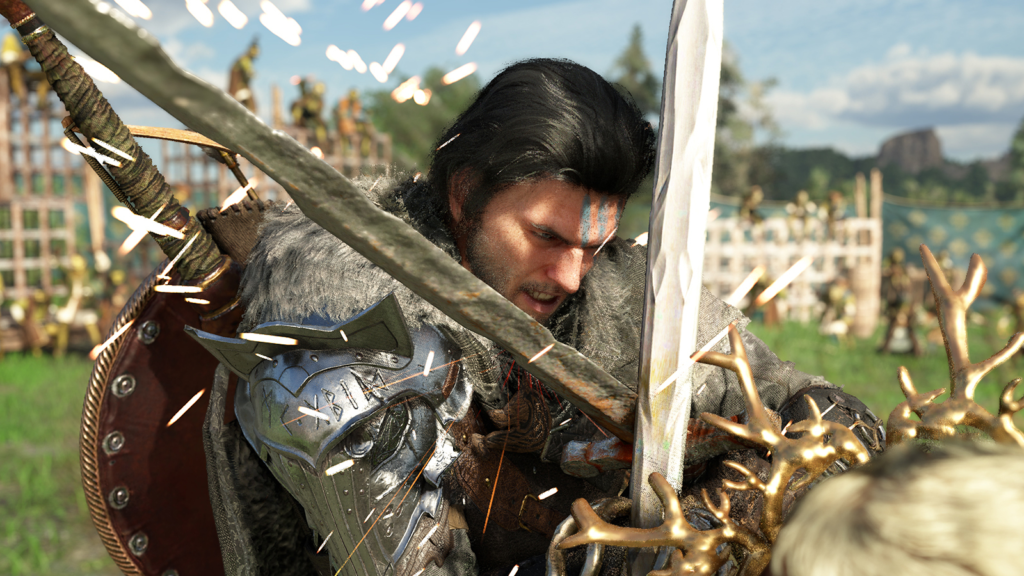
One of the first things that stands out about Crimson Desert is how much freedom it gives the player. The game feels less like a strictly guided RPG and more like a sandbox where experimentation is encouraged. Whether you’re climbing castle walls, picking up giant trees as weapons, or improvising recipes over a campfire, the game constantly invites you to try something unexpected.
From the beginning of the demo, the world already feels alive and reactive. NPCs go about their routines, guards react to suspicious behavior, and side quests appear organically as you explore. Even early on, it becomes clear that Crimson Desert is trying to blend multiple gameplay styles into a single experience.
It combines the exploration freedom of open-world RPGs with action-heavy combat and immersive simulation elements.
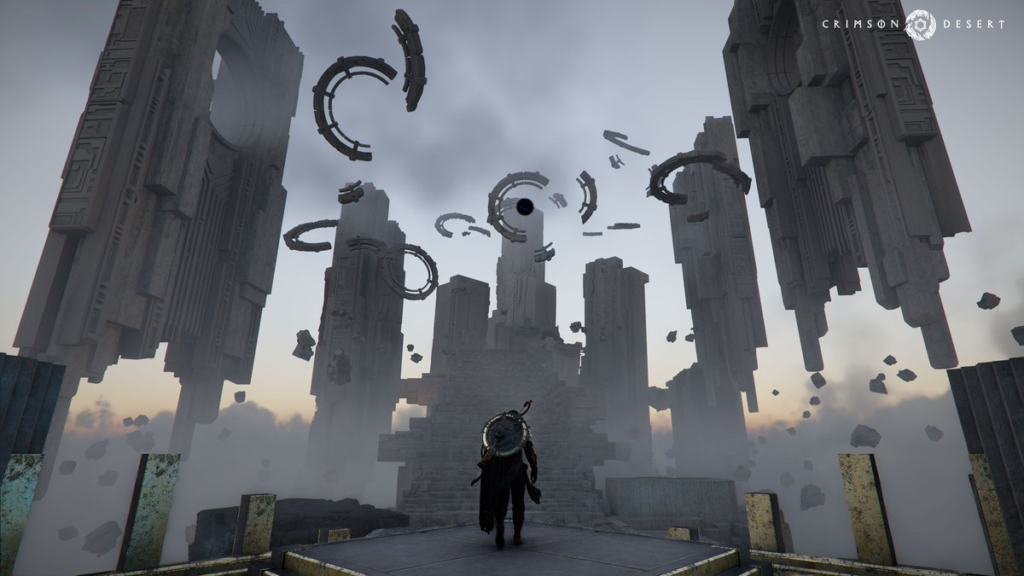
The preview begins with a short story segment that introduces the downfall of the Greymanes. After this narrative setup, players are transported to a floating island known as an Abyss Island, which serves as the tutorial area. Instead of overwhelming players with menus and text boxes, the tutorial teaches mechanics through gameplay. You learn how to jump, move, and use abilities while exploring the island itself.
One of the first magical abilities introduced is Blinding Light, which demonstrates how magic and combat skills blend together in the game. These floating islands appear throughout the demo and act as training grounds for new mechanics. One of them later introduces a particularly interesting ability called Axiom Force.
Axiom Force quickly became one of the most memorable mechanics in the demo. The ability allows players to manipulate objects in the environment using magical force. At first, it’s used mainly for solving puzzles—lifting objects, moving obstacles, or activating mechanisms.
But once you start experimenting with it, the possibilities become much more interesting. For example, you can pull down trees using Axiom Force and manipulate environmental objects in ways that feel surprisingly dynamic. I even tried breaking a tree entirely, though I suspect that may require a later skill upgrade. There are also hints in the skill tree suggesting that Axiom Force can eventually be used for mobility, potentially allowing players to launch themselves or create creative movement options.
If that turns out to be true, it could add a whole new dimension to traversal.
Speaking of traversal, Crimson Desert features an impressively flexible parkour system. One of the highlights of my playthrough involved attempting to infiltrate the Castle of Hanan. The mission was supposed to be straightforward: find a disguise and enter through the main gate. Naturally, I ignored that approach.
Instead, I decided to test the parkour system to see if the game would actually allow me to scale the castle walls. In many games, invisible barriers would stop you from doing something like that. But not here. After running along the cliffs surrounding the castle, I eventually found a section of the wall that looked climbable. I jumped—and to my surprise, the game allowed it. From there, I managed to climb over the wall and enter the castle entirely through parkour.
It felt incredibly satisfying. Once inside, things quickly turned chaotic as guards spotted me and began chasing me across the courtyard. Fortunately, the parkour system also allows you to break line of sight by climbing walls or jumping over obstacles. This created a thrilling cat-and-mouse sequence as I escaped the guards by scaling buildings and leaping across structures.
Moments like this gave the game strong Assassin’s Creed–style vibes, mixed with the unpredictability of games like Skyrim.
If exploration is impressive, the combat system might be even better. Combat in Crimson Desert feels weighty and tactical, but it also leaves room for creativity.
Players have access to a wide range of combat options:
The system rewards both skill and preparation. Going into fights without proper abilities or consumables can make battles significantly harder.
I learned that lesson the hard way.
One of the major moments in the preview was a boss fight against a creature known as The Horn Splitter.
Since I was rushing through the demo, I entered the fight completely unprepared.
No skills assigned.
No consumables.
No buffs.
As you might expect, the fight was brutal.
The Horn Splitter requires careful timing and pattern recognition. Dodging its attacks and learning its behavior felt similar to boss encounters in challenging action RPGs. However, once I went back and properly prepared—assigning skills and cooking food for buffs—the fight became much more manageable.
This showed how much character preparation matters in Crimson Desert. The game doesn’t just rely on raw combat skill. Your build and gear choices play a huge role in your success.
Another interesting system tied to combat is the Observation Mechanic. Some abilities can be learned simply by observing certain actions during gameplay. For instance, performing evasive dodges repeatedly can eventually unlock the Evasive Dodge ability, which slows down time and creates opportunities for counterattacks.
However, the same skills can also be purchased directly through the skill tree.
This creates an interesting choice for players:
Players who prefer experimentation may enjoy unlocking abilities through observation rather than spending resources.
One of the most unexpected combat features is the inclusion of wrestling-style moves. Yes, Crimson Desert actually lets you perform moves straight out of professional wrestling.
These include:
And surprisingly, they aren’t just gimmicks.
These moves are powerful combat abilities that can deal massive damage—even to bosses. Using them feels incredibly satisfying. Watching your character grab an enemy and slam them into the ground mid-battle adds a layer of spectacle that few RPGs attempt.
It’s chaotic, ridiculous, and incredibly fun.
Defeating bosses rewards players with unique gear. After defeating the Horn Splitter, I obtained a weapon called the Sword of the Lord. This sword comes equipped with an Abyss Core, a system that functions somewhat like slotted abilities.
In this case, the core allowed the weapon to unleash energy waves during the final strike of a combo. While the sword itself didn’t deal extremely high damage initially, it’s likely that upgrades at the blacksmith will significantly increase its effectiveness.
From the endgame demo save, it’s clear that much more powerful weapons and Abyss Core combinations exist. This system has the potential to create interesting weapon builds.
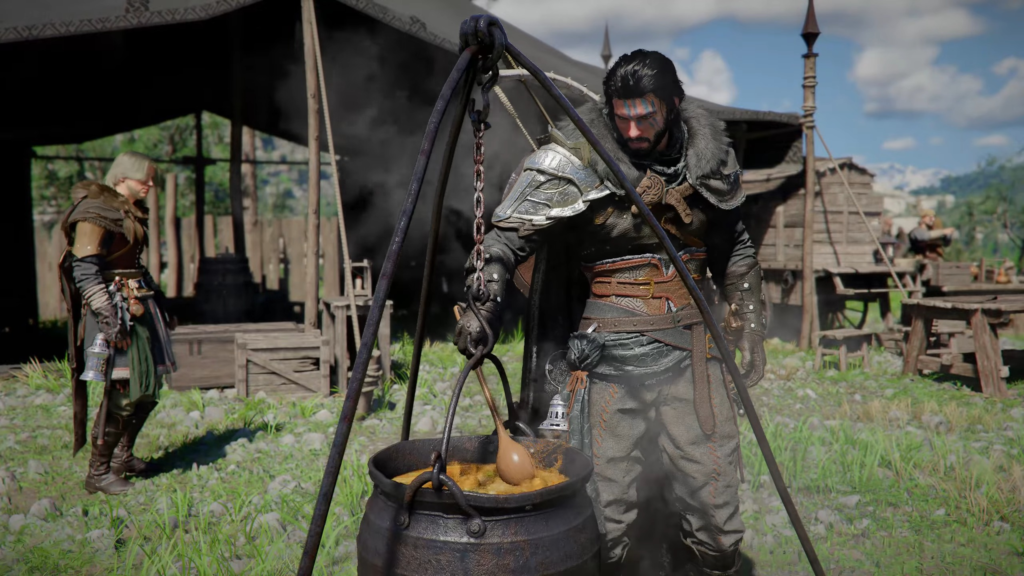
Cooking turned out to be far more complex than expected. The system feels similar to the cooking mechanics in open-world adventure games where players can either follow recipes or improvise.
You can gather ingredients by hunting animals, collecting materials, and exploring the world.
Then you can cook meals that provide buffs such as:
The system allows for both structured recipes and experimental combinations, giving players flexibility in how they prepare for battles. Considering how important buffs were during the Horn Splitter fight, cooking may become a key part of character progression.
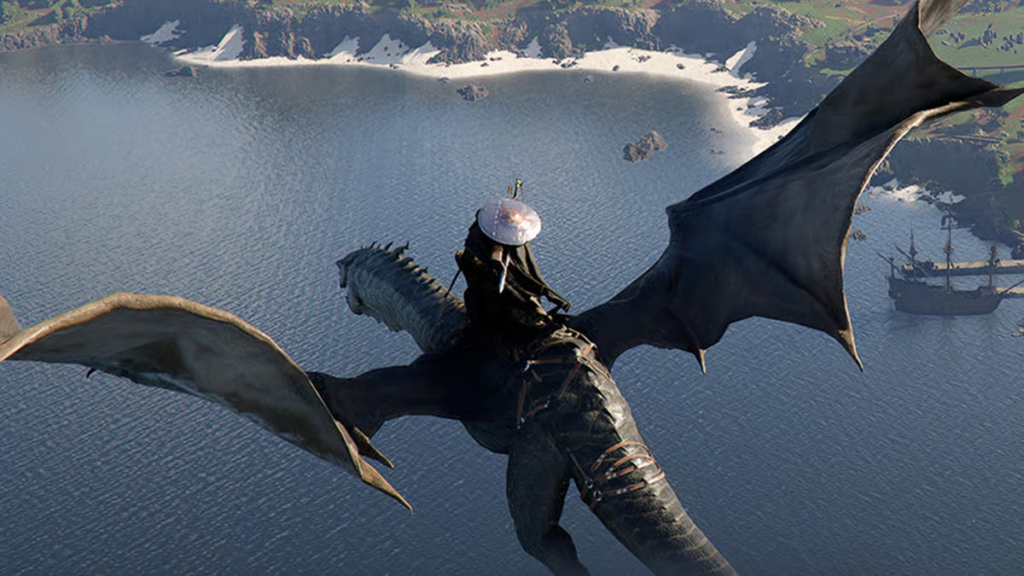
One of the most exciting moments in the preview came from a brief experience with dragon riding. Unfortunately, I didn’t capture footage of this section because it was part of an endgame save provided for the demo. But the experience itself was incredible.
Flying across the battlefield while breathing fire and launching fireballs felt incredibly powerful. Entire groups of soldiers could be wiped out in seconds. However, the game balances this by introducing enemies with powerful weapons capable of shooting dragons out of the sky.
So while dragon riding feels powerful, it doesn’t completely break the game’s balance.
Crimson Desert also features a surprisingly diverse range of side activities. Some side quests are traditional RPG tasks, such as hunting bandits or retrieving lost items. Others are much more unusual.
At one point, I was tasked with cleaning someone’s chimney using a broom. Another quest involved retrieving someone’s missing cat. These odd jobs give the world personality and provide a refreshing break from combat-heavy gameplay. The game also includes over 20 mini games, including activities like arm wrestling. The arm wrestling mini game works similarly to mechanics seen in other games—players rapidly press a button to fill a bar faster than their opponent.
While simple, these mini games add variety and give players more reasons to explore the world.
One of the most underrated features in Crimson Desert is the first-person camera option. Players can switch into first-person view at almost any time. This makes exploring the world feel more immersive and allows players to appreciate the game’s detailed environments. You can even flip the camera around to look at your character up close.
For players who enjoy immersive exploration, this feature could become a favorite.
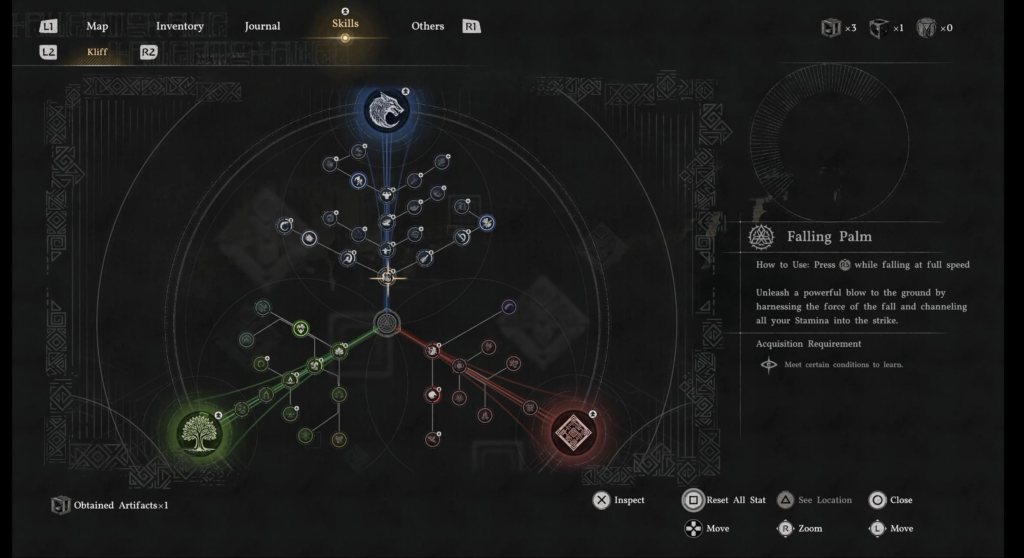
The skill tree system in Crimson Desert is quite expansive.
Each major skill branch focuses on a different gameplay aspect:
Many skill nodes also contain sub-nodes, which provide additional abilities or passive upgrades. Another interesting mechanic is that some skills can be shared across characters. Once purchased on one character, certain skill types become available for other characters as well. However, the animations and execution styles differ between characters.
This system encourages experimentation with multiple playstyles.
While the gameplay itself was impressive, the preview build wasn’t perfect. One of the biggest issues was the control scheme. Some actions felt unintuitive, especially for players used to other action games. For example, sprint jumping requires releasing the sprint button before pressing jump.
That small difference made parkour feel awkward at times. Additionally, sprinting uses a GTA-style tapping mechanic, meaning players must repeatedly tap the sprint button rather than holding it.
This may frustrate some players if it isn’t adjustable. Performance was mostly stable, running at 4K and over 60 FPS, which is impressive considering the demo didn’t use DLSS. However, there were occasional stutters and one crash during the session. According to the developers, this was likely related to a driver issue on the demo PC.
Hopefully these problems will be resolved before launch.
After spending time with Crimson Desert, it’s clear that the game is incredibly ambitious.
It combines elements from multiple genres:
At its best, the game feels like a blend of several beloved titles—mixing the exploration freedom of Skyrim, the traversal of Assassin’s Creed, and the challenging combat of modern action RPGs. Of course, there are still rough edges.
The control scheme could use refinement, and performance stability will need to improve before release. But even with those issues, the potential here is undeniable. If the developers can polish the experience and fully realize the systems shown in this preview, Crimson Desert could become one of the most exciting RPGs in years.
And honestly, I can’t wait to dive back into it.