Physical Address
304 North Cardinal St.
Dorchester Center, MA 02124
Physical Address
304 North Cardinal St.
Dorchester Center, MA 02124
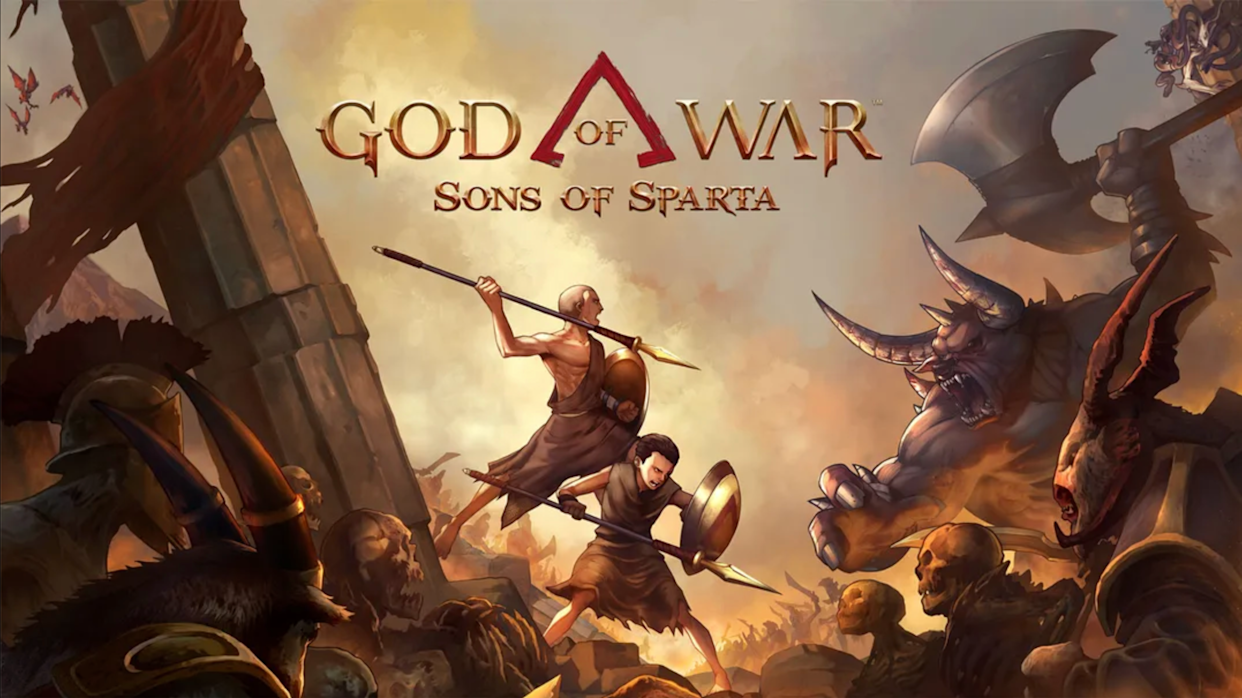
When Sony shadow-dropped God of War: Sons of Sparta during its latest State of Play showcase, it genuinely caught the gaming community off guard. Rumors of a 2D, Metroidvania-style God of War project had been floating around for a while, but few expected it to materialize like this—quietly, confidently, and instantly playable.
What makes this surprise even bigger is that this isn’t just another spin-off set somewhere in the God of War universe. Sons of Sparta is a full-blown return to the Greek Saga, long before the Norse adventures of Kratos and Atreus. It stars a young Kratos in training, years before the events of the original 2005 classic, and it even brings back the original voice of the Ghost of Sparta, TC Carson, to narrate the journey. For longtime fans, that alone is enough to raise an eyebrow—and maybe a nostalgic grin.
Developed as a collaboration between Santa Monica Studio and Megaat Studios, Sons of Sparta takes a bold approach. Instead of replicating the cinematic, over-the-shoulder spectacle of the modern entries, it reimagines the franchise as a 2D Metroidvania with detailed pixel art, layered exploration, and a surprisingly strong narrative backbone.
At its core, Sons of Sparta is unmistakably a Metroidvania. You explore interconnected environments, unlock new abilities and sub-weapons, and gradually open paths that were previously inaccessible. It’s a formula that has been refined and perfected by countless games over the years.
Visually, the game leans into a highly detailed 2D pixel art style. At first glance, the art can seem a little “clean”—almost overly polished in a way that risks feeling generic. But the deeper you get, the more the environmental variety shines. This isn’t just caves and corridors stitched together. Temples, war-torn landscapes, sacred Spartan grounds, and mythological ruins all bring personality to the world.
The comparison that immediately comes to mind is Blasphemous in terms of aesthetic ambition, though Sons of Sparta feels less grotesque and more traditionally mythological. There’s reverence here for ancient Greek culture beyond just fire, brimstone, and angry gods. The world-building draws from Spartan traditions and myth in a way that feels deliberate rather than decorative.
Interestingly, the structure feels somewhat similar to Prince of Persia: The Lost Crown. Like that game’s exploration of Persian mythology, Sons of Sparta tries to expand on Greek culture beyond the obvious Zeus-and-Ares headlines. It adds nuance. It adds context.
And that’s something God of War doesn’t always get credit for.
On paper, the story sounds like it shouldn’t matter. We already know how Kratos’ Greek saga ends. We know the tragedies that define his path. We know what kind of man he becomes.
Yet Sons of Sparta still finds a way to make this chapter compelling.
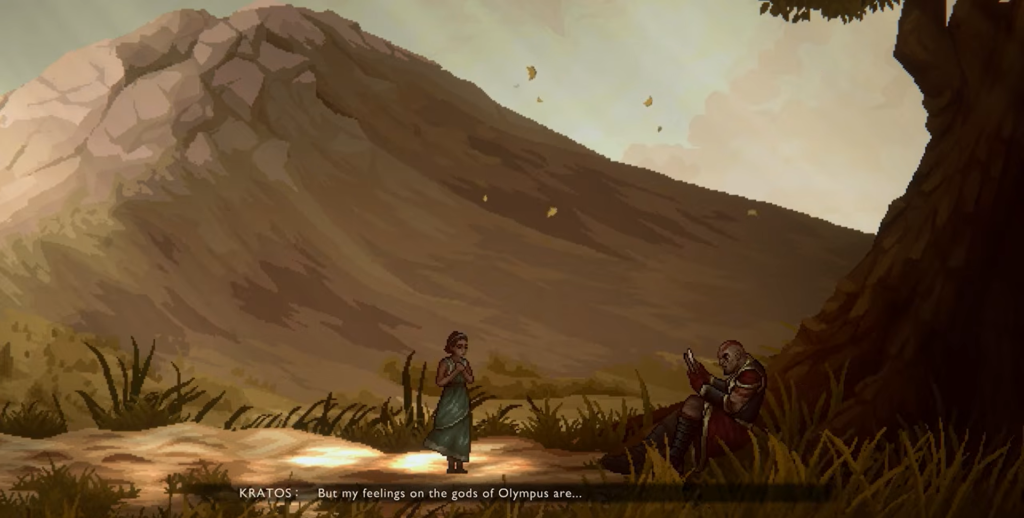
The game focuses heavily on the bond between Kratos and his brother Damos—a character first introduced in God of War: Ghost of Sparta. That PSP spin-off is often overlooked, but fans who played it remember how emotionally heavy that story was. Revisiting that relationship in a new context gives Sons of Sparta real emotional weight.
This is technically a spin-off of a spin-off, but it never feels trivial. Instead, it feels like a character study of a younger Kratos—still brutal, still ambitious, but not yet fully consumed by rage.
In some scenes, he’s even… reasonable.
For a character famous for screaming at gods and tearing monsters apart with his bare hands, that subtle humanity is almost shocking. It adds layers to a character who has already undergone one of gaming’s most impressive evolutions in the Norse era.
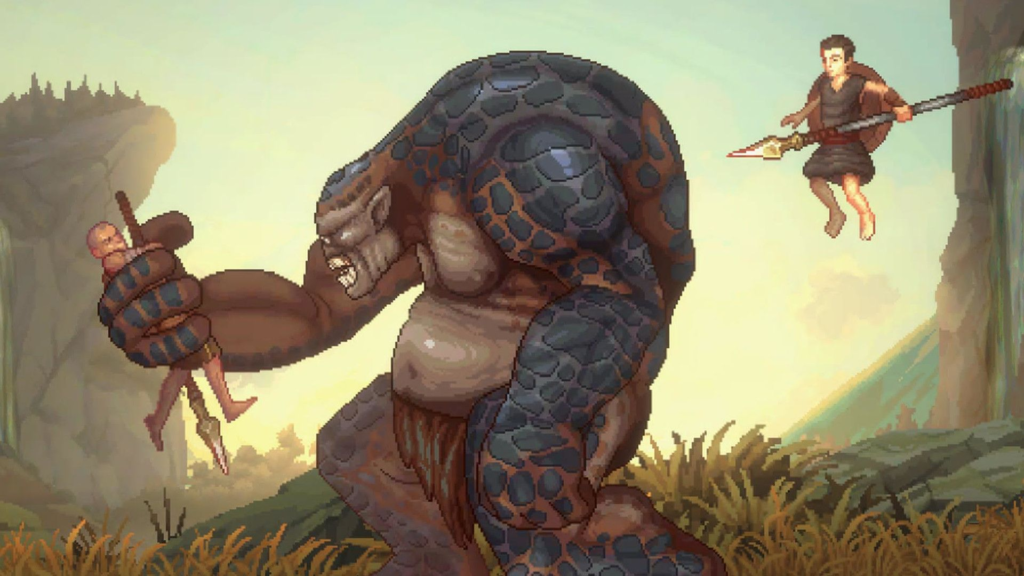
Combat is where Sons of Sparta proves it understands its roots.
The enemies are chunky. They take hits. Orbs burst out when they fall. You feel like a tank—more in line with the original Greek trilogy than the precision-heavy style of the Norse entries.
There’s a dodge, a block, and a parry system that mirrors the feel of the shield mechanics introduced in the modern era. That fusion works surprisingly well in 2D.
One of the standout mechanics is Spirit Strike, an ability that restores health by dealing damage. It creates a constant push-and-pull:
It’s not revolutionary, but it adds depth. You’re constantly balancing aggression with resource management. Death usually comes from accumulated mistakes rather than a single brutal hit—more “death by a thousand cuts” than instant punishment.
That said, the controls aren’t perfect.
Movement can feel slightly stiff. There’s a noticeable delay after dodging before jumping. Wall jumps sometimes feel awkward due to input timing. These aren’t deal-breakers, but in a genre where fluidity is king—think Dead Cells or Castlevania: Symphony of the Night—any stiffness stands out.
Blocking and attacking feel great. Platforming just needs a bit more polish to reach elite-tier Metroidvania standards.
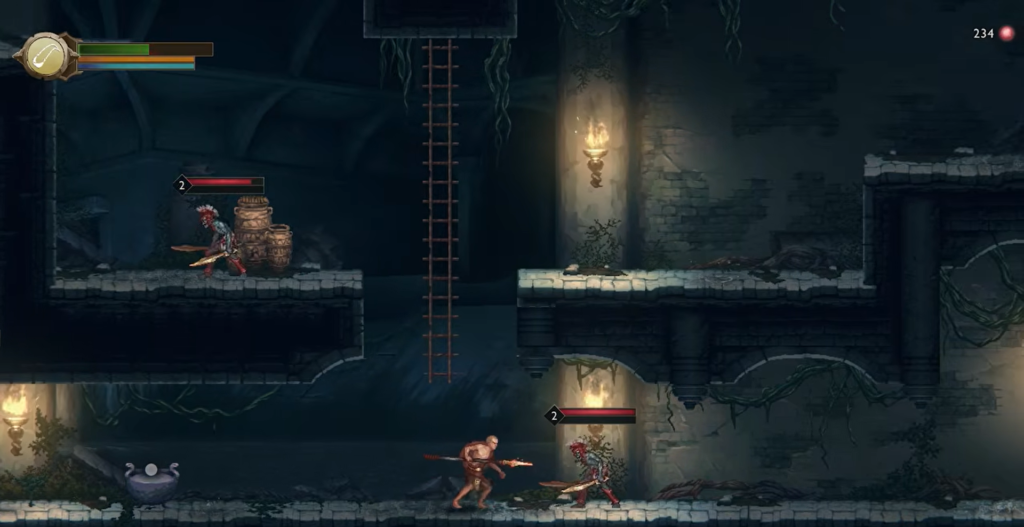
Where the game feels most like the Norse saga is in its progression systems.
You collect materials, blood orbs, and various upgrade items throughout exploration. At camps or blacksmiths, you can:
The menus and UI strongly resemble the modern God of War games. There’s a lot to collect—sometimes almost overwhelming. But the pacing is smart. Upgrades are spaced evenly enough that you rarely feel stuck grinding.
Temples grant new sub-weapons that open alternate routes, reinforcing the Metroidvania structure. Once an area’s main story beats are completed, you can revisit it for collectibles and hidden upgrades.
It’s structured like the Norse games—story first, completionist clean-up second.
The music deserves special praise. Bear McCreary, composer of the Norse trilogy, returns here—and it shows. The soundtrack blends epic orchestral themes with softer, retro-inspired melodies. Sometimes it feels like ambient exploration music from The Elder Scrolls V: Skyrim woven together with lo-fi pixel-era compositions.
The vibe is surprisingly chill for a God of War game. Don’t expect bombastic, over-the-top openings. There’s no massive cinematic hook in the first hour. Instead, the game eases you in. It lets the mechanics and world speak for themselves.
That restraint is unusual for the franchise.
For all its strengths, Sons of Sparta lacks one defining, standout hook.
It’s polished. It’s thoughtful. It’s well-constructed. But it doesn’t have that jaw-dropping moment that makes you instantly text your friends.
Visually, while detailed, some screens feel a bit bland. The art style doesn’t quite achieve the iconic silhouette that some of the genre’s best manage to capture. It avoids being a clone, but it doesn’t fully carve out a striking identity either.
And the stiffness in movement, while minor, occasionally makes boss fights harder than they need to be. These are fixable issues—especially if post-launch patches address responsiveness.
That depends on what you want from God of War. If you expect massive cinematic sequences, outrageous brutality, and explosive set pieces, this isn’t that. It’s not as bloody or over-the-top as the Greek trilogy. It’s not as narratively grand as the Norse saga. Instead, it’s something smaller—but still meaningful.
As a Metroidvania, there are arguably stronger entries in the genre. But as a 2D interpretation of God of War’s core identity, it succeeds more often than it fails.
It respects the past.
It experiments with form.
It adds emotional nuance.
And it reminds us why Kratos remains one of gaming’s most enduring characters.
We’re still working through the full experience, and it’s bigger than expected. What started as a curiosity has turned out to be a substantial, story-driven adventure with solid combat, smart progression, and a surprisingly reflective tone.
Sons of Sparta may not redefine the genre.
It may not be the flashiest God of War ever made.
But it’s a thoughtful, nostalgic, and surprisingly layered return to the Greek saga.
For longtime fans—especially those who remember the emotional beats of Ghost of Sparta—this feels like a meaningful expansion of Kratos’ legacy. And for newcomers? It’s a unique entry point into the brutality and mythology that made the franchise iconic. Now the big question is yours:
Did you jump in right after the shadow drop? Or are you waiting to see how the full verdict shakes out?
Spartan law says it’s not stealing if we don’t get caught.
But the gods are always watching.